
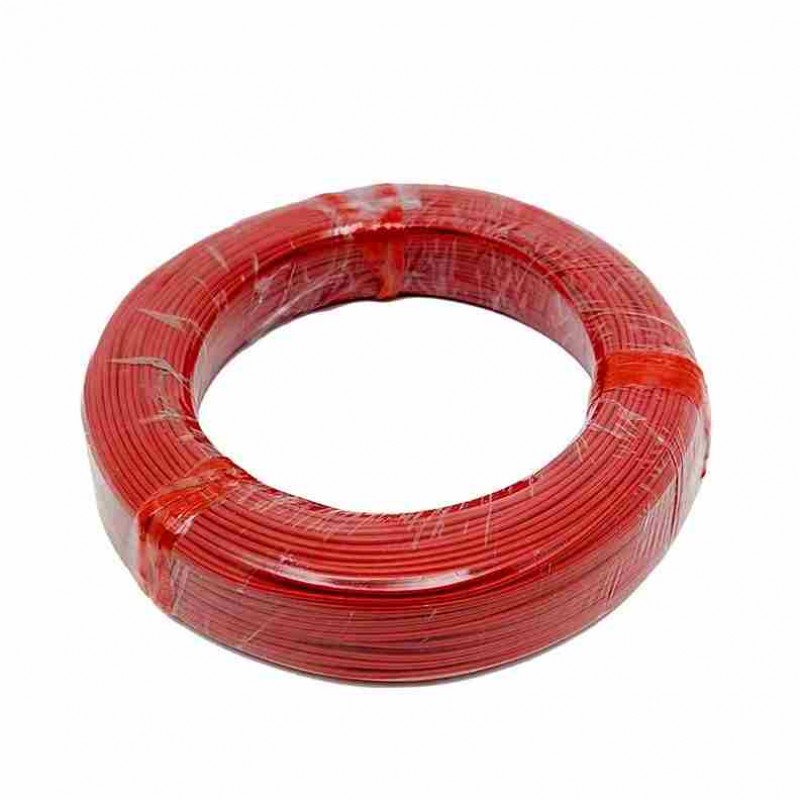
Loop Detector Cable 100m UAE
Price 150 AEDIn Stock
The Loop Detector Cable 100m is a specialized inductive loop wire designed for vehicle detection systems used with automatic parking barriers, gates, traffic control systems and vehicle access equipment.
The cable is installed inside a saw-cut loop in the road surface and connected to a compatible vehicle loop detector. When a vehicle passes over or stops above the inductive loop, the detector senses the change in inductance and provides an output signal to the connected barrier, gate controller or traffic system.
Supplied in a 100-meter length, the cable uses tinned copper wire and is designed with resistance to high temperatures, aging, corrosion, acids and alkalis, making it suitable for professional vehicle detection installations.
Key Features
- 100-meter vehicle loop detector cable
- Tinned copper wire conductor
- Designed for inductive vehicle detection loops
- Suitable for parking barrier systems
- Suitable for automatic gate systems
- Suitable for vehicle access control
- High-temperature resistance
- Aging-resistant cable construction
- Corrosion resistance
- Acid and alkali resistance
- Designed for installation in road saw cuts
- Compatible with suitable single-channel loop detectors
- Compatible with suitable dual-channel loop detectors
- Suitable for residential and commercial parking systems
Technical Specifications
| Product Type | Vehicle Loop Detector Cable |
| Cable Length | 100 Meter |
| Conductor Material | Tinned Copper Wire |
| Detection Method | Inductive Loop Vehicle Detection |
| Typical Saw-Cut Width | 3–5 mm |
| Typical Saw-Cut Depth | 40–50 mm |
| Temperature Resistance | High-Temperature Resistant |
| Environmental Resistance | Aging / Corrosion / Acid / Alkali Resistant |
| Installation | Road / Floor Saw-Cut Loop |
| Application | Vehicle Detection / Parking Barrier / Automatic Gate / Traffic Control |
Vehicle Loop Detector Cable
The vehicle loop detector cable forms the inductive sensing loop used by a compatible loop detector to identify the presence of a vehicle.
The cable itself does not directly open a gate or parking barrier. It must be connected to a compatible vehicle loop detector, which processes changes in the loop's inductance and provides a relay or control output to the automation system.
How Does an Inductive Loop Detector Work?
The loop cable is installed in several turns inside a slot cut into the road surface. Once connected to a compatible loop detector, the cable forms an electromagnetic inductive loop.
When a metal vehicle enters the detection area, it changes the electrical characteristics of the loop. The detector identifies this change and activates its configured output.
Loop Cable for Parking Barriers
Inductive loop cables are widely used with automatic parking barrier systems for vehicle detection.
Depending on the barrier controller and loop detector configuration, the vehicle detection signal can be used for opening commands, presence detection, safety functions or automatic closing logic.
Loop Cable for Automatic Gates
The 100m loop cable can also be used with compatible automatic sliding and swing gate systems.
A correctly configured vehicle loop detector can provide a dry-contact relay signal to a compatible gate control board for the required vehicle detection function.
Vehicle Exit Loop
An inductive loop can be configured as a vehicle exit loop in compatible access control installations.
When a vehicle drives onto the loop, the loop detector can provide an opening signal to the parking barrier or automatic gate controller, allowing automatic vehicle exit without using a remote control or access card.
Parking Barrier Safety Loop
A vehicle loop can also be used as part of a parking barrier safety system.
When correctly configured with compatible equipment, vehicle presence can be detected underneath or around the barrier arm to help prevent inappropriate closing while a vehicle remains in the detection zone.
100 Meter Loop Detector Wire
The cable is supplied in a convenient 100-meter length, providing sufficient material for multiple loop installations depending on the required loop dimensions, number of turns and lead-in distance.
The actual cable requirement should be calculated according to the installation design before cutting the cable.
Tinned Copper Loop Cable
The loop detector cable uses a tinned copper conductor suitable for inductive vehicle detection applications.
The cable is designed for demanding installations where temperature, aging and environmental resistance are important.
Loop Detector Cable Installation
A typical inductive loop installation includes the following steps:
- Mark the required vehicle detection loop on the road surface.
- Cut the loop groove into the concrete or asphalt.
- Clean and completely dry the saw-cut groove.
- Install the required number of cable turns inside the groove.
- Route the lead-in cable toward the loop detector.
- Seal the saw-cut using a suitable road-loop sealant.
- Connect the loop cable to the compatible vehicle detector.
- Configure and test detector sensitivity.
- Test vehicle detection before commissioning the gate or barrier.
Recommended Saw-Cut Size
The current product specifications recommend a typical groove width of approximately 3–5 mm and a depth of approximately 40–50 mm.
Actual groove dimensions should also take into account the cable diameter, road construction, loop layout and sealing material being used.
Loop Cable Installation in Concrete
For existing concrete surfaces, a saw-cut is normally made according to the required loop dimensions.
The groove should be cleaned and dried before installing the cable. After installation, the slot should be properly sealed to protect the cable from movement, moisture and mechanical damage.
Loop Cable Installation in Asphalt
Inductive vehicle loops can also be installed in suitable asphalt surfaces.
Correct installation depth, cable protection and sealing are important because vehicle traffic and road-surface movement can affect the long-term reliability of the loop.
Loop Detector Cable for PD-132
The loop cable can be used to create an inductive detection loop for a compatible PD-132 single-channel vehicle loop detector.
The detector can then provide the required relay output to compatible parking barriers, automatic gate controllers or other vehicle access equipment.
Loop Detector Cable for PD-232
The cable can also be used to create detection loops for compatible PD-232 dual-channel vehicle loop detector installations.
A dual-channel detector allows two separate inductive loops to be monitored where the application requires multiple vehicle detection zones.
Vehicle Loop Detector Applications
- Automatic parking barriers
- Sliding gate automation
- Swing gate automation
- Vehicle exit detection
- Barrier safety loops
- Vehicle presence detection
- Parking access control
- Car park entrances and exits
- Residential parking areas
- Commercial parking facilities
- Warehouse entrances
- Factory vehicle entrances
- Traffic management systems
Complete Vehicle Loop Detector System
A typical vehicle loop detection installation may include:
- Inductive loop detector cable
- Single-channel or dual-channel loop detector
- Automatic gate or parking barrier controller
- Suitable electrical enclosure
- Road saw-cut and sealing material
- Electrical wiring and protection
Professional Loop Detector Installation
Professional installation is recommended because the performance of an inductive vehicle loop depends heavily on the loop dimensions, number of turns, cable routing, inductance, road conditions and detector settings.
After installation, the complete loop should be tested with different vehicles to confirm reliable detection before the gate or parking barrier is placed into normal operation.
Loop Detector Cable 100m Supplier in UAE
AAM Automatic Doors & Gate Barriers supplies 100m loop detector cable in UAE for automatic gates, parking barriers and vehicle access control systems.
Supply and technical support are available across Dubai, Sharjah, Abu Dhabi, Ajman, Ras Al Khaimah, Fujairah, Umm Al Quwain and Al Ain.

